
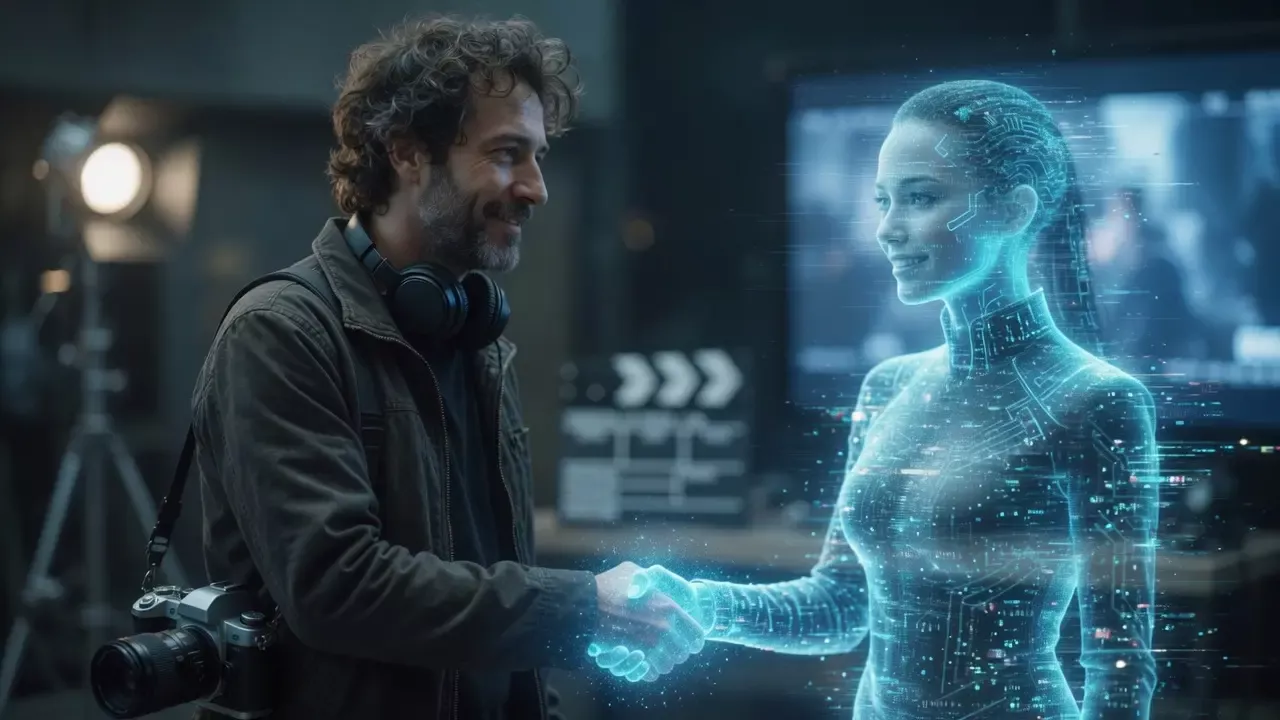
In the heart of one of the world’s most dynamic creative capitals, a quiet revolution is underway. London, long a hub for film, advertising, and media production, is now at the forefront of a technological shift that is challenging the traditional video production agency model. Startups leveraging artificial intelligence are democratizing high-quality video creation, slashing costs and timelines, and enabling businesses of all sizes to produce professional content without the need for expensive crews, studios, or lengthy post-production cycles. This transformation is not merely about automation; it represents a fundamental reimagining of how visual storytelling is conceived, executed, and distributed.
Traditional video agencies have historically thrived on their expertise in scripting, shooting, directing, and editing. A typical corporate video or marketing campaign might involve weeks of pre-production, on-set filming with actors and crews, and months of editing, often costing tens or hundreds of thousands of pounds. For many small and medium-sized enterprises (SMEs), as well as even larger organizations seeking frequent content updates, these barriers have limited video’s potential as a communication tool. Enter AI-powered startups: platforms that generate avatars, synthesize voices, edit footage intelligently, and even create entire scenes from text prompts. These tools are not just supplements; in many cases, they are becoming viable replacements for full agency workflows.
The Rise of AI Video in London’s Tech Ecosystem
London’s AI scene provides fertile ground for this disruption. The city boasts a rich talent pool from institutions like University College London (UCL) and Imperial College, combined with strong venture capital interest and government support for tech innovation. This ecosystem has nurtured companies that are redefining video production.
One standout example is Synthesia, a London-headquartered company founded in 2017 by AI researchers. Synthesia allows users to create studio-quality videos from simple text inputs using AI avatars and voiceovers supporting over 160 languages. Businesses can produce training videos, marketing materials, or internal communications without cameras, actors, or studios. The platform has gained traction with major enterprises, including a significant portion of the FTSE 100, by promising up to 90% savings in time and cost. Its growth trajectory is impressive: it has raised substantial funding, achieved significant valuation milestones, and expanded its headquarters in central London, even earning praise from the city’s mayor as a homegrown success story. By enabling rapid localization and personalization, Synthesia addresses a key pain point for global companies—creating culturally relevant content at scale without multiple production shoots.
Complementing such avatar-focused solutions is VEED, another London-based platform that emphasizes intuitive AI-driven editing and generation. VEED empowers marketers and solopreneurs to turn ideas into polished videos quickly, with features like text-to-video generation, automatic subtitles, AI voiceovers, and background removal. Its browser-based interface lowers the technical barrier, allowing users to generate, edit, and export professional content without specialized software or teams. This accessibility has resonated particularly with social media content creators and brands needing frequent, platform-optimized videos.
Further along the spectrum, companies like Metaphysic and others in the ecosystem have pushed boundaries in photorealistic content generation. Known for high-profile work in film, such as de-aging actors in major productions, these technologies demonstrate AI’s potential beyond corporate videos into entertainment. While initially focused on deepfake-like capabilities with ethical safeguards, they highlight how generative AI can augment or even bypass traditional visual effects teams.
These startups are part of a broader wave. London’s AI video ecosystem benefits from proximity to tools and talent, with the convergence of text-to-video models, voice synthesis (bolstered by local players like ElevenLabs), and intelligent editing tools creating a comprehensive alternative to agency pipelines. For more on the vibrant London AI startup scene, see resources like GrowthList: London AI Startups.
Traditional agencies are also adapting. ARTtouchesART, an award-winning video production company based in London, exemplifies this evolution by embracing the new generation of storytellers. The company blends artistic filmmaking expertise with AI-powered video production across every stage of production — from concept development to final editing. By integrating advanced AI for innovation while maintaining human creativity in storytelling, cinematography, and client collaboration, ARTtouchesART delivers standout promotional videos, corporate films, music videos, and more. This hybrid approach allows them to offer competitive, high-quality results that combine visual artistry with commercial impact, helping brands and creatives thrive in an AI-driven landscape.
Cost, Speed, and Scalability: The Core Advantages
The economic case for AI video is compelling. Traditional production involves high fixed costs: location scouting, equipment rental, talent fees, and labor for editing. AI shifts this to variable, on-demand expenses. A video that once required a £50,000 budget and six weeks can now be prototyped in hours for a fraction of the cost using platforms like Synthesia or VEED.
Small businesses are reportedly saving 70-90% using AI video generation versus traditional production costs. For example, a 10-video social media campaign might cost just a few hundred pounds with AI versus tens of thousands through a traditional agency. Speed is equally transformative. In fast-paced industries like e-commerce or tech, timely content is critical. AI enables A/B testing of multiple video variants, rapid localization for international markets, and on-the-fly updates. For instance, a company rolling out a new product can generate explanatory videos in dozens of languages overnight, something that would traditionally require coordinating multiple agencies or shoots.
Scalability further tilts the scales. Enterprises needing hundreds of personalized videos—for employee onboarding, customer support, or marketing—find AI platforms ideal. Human agencies struggle with volume due to capacity constraints, whereas AI handles repetition and customization effortlessly. This has led to a surge in “AI-first” content strategies, where startups provide the backbone, and human creatives focus on strategy and oversight rather than execution.
Data from industry analyses underscores this shift. Marketers are increasingly adopting AI video, with many reporting increased investment and efficiency gains. The technology excels in repetitive or standardized content like tutorials, explainers, and internal comms, freeing agencies to tackle high-end, narrative-driven projects where human nuance remains irreplaceable.
Transforming Workflows and Creative Processes
Beyond efficiency, AI is reshaping creative workflows. Pre-production benefits from AI script generation and storyboarding tools. During “production,” text-to-video models can visualize concepts instantly. Post-production sees AI handling tedious tasks: auto-editing, color correction, subtitling, and even suggesting cuts based on engagement metrics.
London startups and forward-thinking agencies are embedding these capabilities into user-friendly platforms and services. VEED’s all-in-one workflow, for example, integrates generation and editing, reducing tool-switching and collaboration friction. This empowers non-experts—marketing managers, HR professionals, educators—to produce content that previously required specialists.
Hybrid models are emerging as the practical reality. Many organizations use AI for initial drafts or bulk production and layer human creativity for refinement, branding alignment, and emotional depth. This augments rather than fully eliminates human input, creating new roles like “AI video directors” who prompt, iterate, and curate outputs.
Challenges and Considerations
Despite the promise, challenges persist. Quality can vary; early AI outputs sometimes lack the polish or emotional resonance of human-crafted work. Consistency across long-form content or complex narratives remains an area for improvement, though rapid advancements in models are closing the gap.
Ethical and legal issues are paramount. Concerns around deepfakes, copyright of training data, and digital likeness rights are actively debated in the UK. Startups like Synthesia emphasize consent and ethical use, such as avatar creation with permission. The UK Government’s Copyright and Artificial Intelligence Consultation explores how to balance innovation with creator protections, including considerations for digital replicas and data mining exceptions.
Bias in AI models, data privacy, and the risk of homogenized content are additional hurdles. London startups and agencies must navigate these to build trust. Transparency in training data and robust watermarking or disclosure mechanisms will be key differentiators.
Job market impacts are nuanced. While entry-level production roles may decline, demand grows for AI-literate creatives, prompt engineers, ethicists, and strategists. The industry is evolving toward higher-value work.
The Future Outlook
Looking ahead, London is poised to solidify its position as a global leader in AI video. Continued investment, talent attraction, and collaborations between startups, established media firms, and academia will drive innovation. Integration with augmented reality (AR), virtual production, and real-time generative tools could further blur lines between digital and physical filmmaking.
For businesses, the message is clear: AI is not a fad but a strategic imperative. Startups are lowering barriers, fostering creativity at scale, and challenging incumbents to adapt. Traditional agencies that embrace AI—using it for efficiency while doubling down on storytelling and client relationships—will thrive. Those that resist risk obsolescence.
In conclusion, London’s AI video startups are not merely replacing aspects of video agencies; they are redefining the entire value chain. By making professional video accessible, affordable, and agile, they empower a new generation of storytellers. The result is a more vibrant, inclusive media landscape where ideas, not budgets, dictate what’s possible. As these technologies mature, the fusion of human ingenuity and artificial intelligence promises to unlock unprecedented creative potential, with London at the vanguard.
