
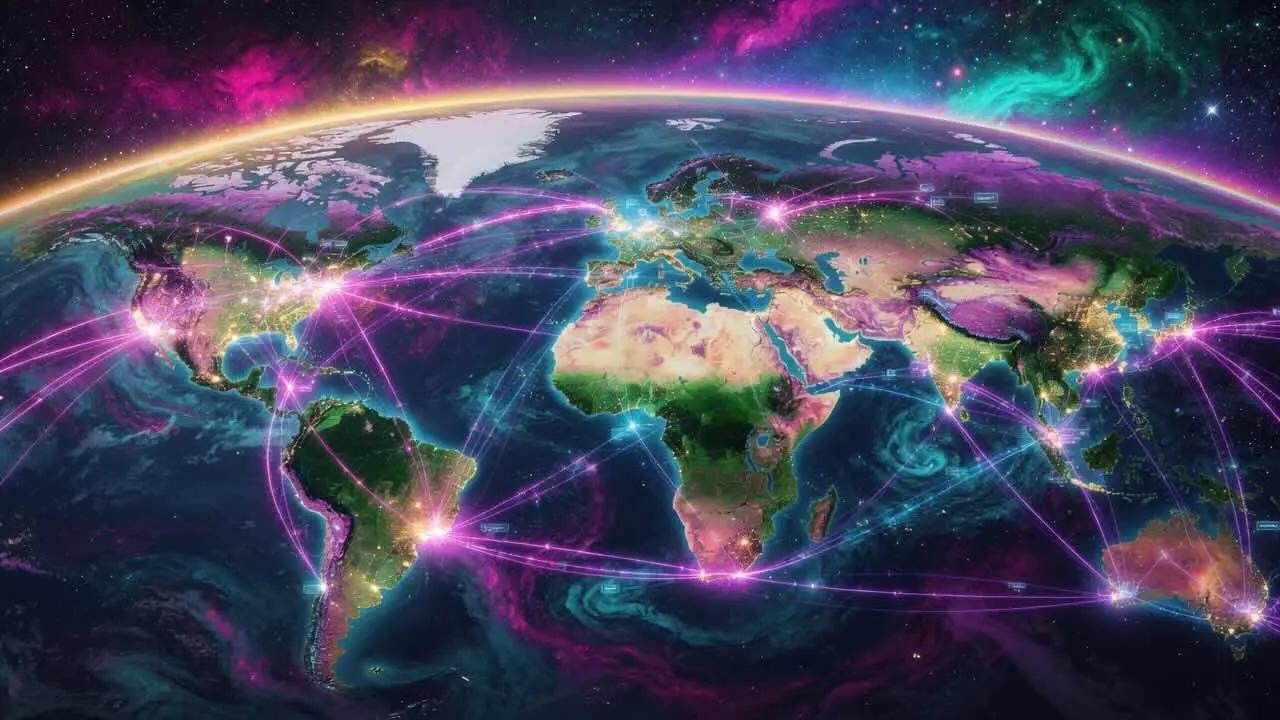
In an increasingly interconnected world, video has emerged as one of the most powerful mediums for communication, education, storytelling, and commerce. Yet traditional video production has long been constrained by significant barriers: high costs, specialized skills, language differences, cultural nuances, and geographic limitations. The advent of artificial intelligence (AI) in video generation and processing is dismantling these obstacles, ushering in an era where video creation transcends borders—literal and figurative. “AI Video Without Borders” represents not just a technological shift but a fundamental transformation in how humanity shares ideas, preserves cultures, and collaborates across the globe.
This article explores the profound implications of AI-driven video technologies, examining their evolution, capabilities, societal impact, challenges, and future potential. By removing traditional constraints, AI empowers individuals, businesses, and communities worldwide to produce high-quality video content with unprecedented ease and reach.
The Evolution of AI Video Technologies
Video production historically demanded expensive equipment, professional crews, extensive post-production, and significant time investments. AI video generation has revolutionized this landscape through generative models capable of creating videos from text prompts, images, or existing footage.
Key advancements include diffusion models and transformer architectures that enable realistic, temporally coherent video synthesis. OpenAI’s Sora, Google’s Veo series, and other models have demonstrated the ability to generate complex scenes with natural motion, lighting, and physics simulation. By 2026, these tools support outputs up to 4K resolution, longer durations (minutes rather than seconds), native vertical formats for social media, and integrated audio.
The market reflects this rapid progress. The global AI video market has experienced explosive growth, with estimates placing its value at around $11.20 billion in 2025 and projections reaching $71.50 billion by 2030, driven by a compound annual growth rate exceeding 36%. Enterprise adoption is surging, with many organizations integrating AI for marketing, training, and content creation.
These technologies build on earlier breakthroughs in image generation and natural language processing. Text-to-video (T2V) models now interpret nuanced prompts, incorporating cinematic styles, emotional tones, and narrative structures. This evolution has shifted video from a scarce, expert-only resource to an abundant, accessible capability.
Breaking Language Barriers
One of the most immediate ways AI eliminates borders is through seamless language translation and dubbing. Traditional video localization required manual subtitling, voice acting, and cultural re-editing—processes that were time-consuming and costly. AI-powered tools now automate speech recognition, neural machine translation, and lip-synced dubbing, producing multilingual versions in hours rather than weeks.
For instance, AI video translation can reduce costs by up to 50% while accelerating market entry for global campaigns. Educational content, corporate training videos, and entertainment can reach non-native speakers without losing impact. Real-time transcription, automated captions, and voice synthesis allow creators to target diverse linguistic audiences effortlessly.
Beyond literal translation, AI facilitates transcreation—adapting content to convey the same emotional and cultural resonance in different languages. Advanced models analyze context, idioms, and sentiment, ensuring messages remain authentic. This capability is particularly valuable for international businesses expanding into new markets, where cultural misalignment can undermine trust.
Consider a small business in rural India creating a product demo video. With AI, it can generate versions in English, Mandarin, Spanish, Arabic, and local dialects, complete with appropriate accents and visual adaptations. This levels the playing field, allowing voices from underrepresented regions to compete globally.
Transcending Cultural Boundaries
Language is only one dimension; culture presents deeper challenges. AI is advancing toward intelligent localization that goes beyond words to visuals, narratives, and symbols. Context-aware models can suggest or automatically adjust elements like clothing, gestures, settings, or humor to align with target audiences while preserving core intent.
This cultural adaptation extends to preserving and sharing indigenous knowledge. Communities in remote areas can document traditions, stories, or practices in video form using simple smartphone prompts, then use AI to make them accessible worldwide with respectful adaptations. Educational institutions benefit enormously: a history lesson on ancient civilizations can incorporate region-specific perspectives and visuals tailored for students in different continents.
Moreover, AI enables reverse cultural flow. Content from the Global South can be amplified without Western-centric filters, fostering greater mutual understanding. Generative tools allow creators to blend styles—mixing traditional African art with modern animation or incorporating Asian storytelling techniques into Western formats—creating hybrid expressions that enrich global culture.
AI accessibility tools further embody this borderless ethos by generating real-time captions, audio descriptions, sign language avatars, and simplified visuals, making video inclusive regardless of sensory or cognitive differences.
Global Collaboration and Democratization
Geographic borders have historically limited collaboration in the creative industries. Teams separated by oceans have faced challenges such as time zone differences, travel costs, and communication barriers. AI-powered video tools are changing this model by enabling asynchronous and real-time co-creation. Cloud-based platforms allow multiple contributors to collaborate on scripts, generate scenes, refine edits, and review changes instantly, regardless of their physical location.
A practical example of this borderless approach is ARTtouchesART, where remote AI video production combines creative expertise with the possibilities of generative AI. By blending human imagination with advanced AI capabilities, we help clients transform their ideas into original and engaging video content, whether they are developing narrative-driven stories, corporate explainers, or culturally adaptive campaigns. Our remote workflow demonstrates how collaboration across locations can create professional-quality productions without the limitations of traditional studio models.
This new approach also opens opportunities for creators and professionals who were previously excluded from traditional production pipelines. Freelancers in Southeast Asia can collaborate with marketers in Europe on global campaigns, using AI to bridge geographical and technical gaps. Non-professionals — including teachers, activists, and entrepreneurs — can access powerful creative tools that allow them to communicate ideas through video. A farmer in Kenya can produce instructional content about sustainable agriculture; a student in Brazil can create animated explanations of climate science.
This democratization represents a fundamental shift: video creation, once largely controlled by specialized teams with expensive equipment and resources, is becoming accessible to anyone with an internet connection and the willingness to learn. As AI-assisted production continues to evolve, audiences are increasingly encountering content where the boundaries between traditional and AI-enhanced creation become less obvious.
The impact extends beyond entertainment and marketing. In education, AI video enables personalized learning experiences, allowing tutors to create customized explanations in students’ preferred languages and visual styles. In healthcare, AI-generated training simulations can adapt to local contexts and languages, improving accessibility and effectiveness. Humanitarian organizations can also benefit from faster video production for awareness campaigns, emergency communication, and fundraising efforts that reach audiences across borders.
Economic and Social Impacts
The economic implications are vast. Small and medium enterprises (SMEs) that previously couldn’t afford video marketing can now compete with larger corporations. Content creators in emerging economies gain new revenue streams through global platforms. The creative economy expands as barriers to entry collapse.
Socially, AI video fosters empathy and connection. Virtual reality experiences combined with generative AI allow users to “visit” distant cultures or historical events. Cross-cultural dialogues become richer when participants share personalized video stories.
However, this transformation is not uniform. Digital divides persist in infrastructure, education, and access to advanced tools. Bridging these gaps requires intentional investment in connectivity, digital literacy programs, and open-source AI models tailored for low-resource environments.
Challenges and Ethical Considerations
Despite its promise, AI video without borders raises critical challenges. Deepfakes and misinformation threaten trust. Watermarking technologies and detection tools are essential countermeasures, but the arms race continues.
Copyright and AI-generated content issues loom large. Training models on vast datasets raises questions of fair use, attribution, and compensation for original creators. Legal frameworks are evolving, with debates over authorship of AI-generated content ongoing.
Ethical concerns include bias in training data, which can perpetuate stereotypes in generated content, and the potential for cultural homogenization if dominant models favor certain perspectives. Privacy risks arise from realistic avatar generation or surveillance applications.
Responsible development demands transparency, robust governance, human oversight in sensitive applications, and inclusive training datasets. International collaboration on standards—much like the discussions at global AI forums—will be crucial to harness benefits while mitigating harms.
Energy consumption of large models also poses environmental challenges, necessitating greener computing approaches.
The Future Outlook
Looking ahead, AI video will become even more sophisticated. Real-time generation, multimodal inputs (text, voice, gesture), and integration with augmented/virtual reality will blur lines between physical and digital worlds. Personalized, interactive videos tailored to individual viewers could redefine entertainment and education.
We may see “universal translators” for visual media, where videos dynamically adapt not just to language but to real-time cultural and personal contexts. Collaborative AI agents could handle entire production pipelines, from ideation to distribution.
The ultimate vision is a world where ideas flow freely, unhindered by borders. Video becomes a universal language enhanced by AI, amplifying diverse voices and fostering global solidarity.
Conclusion
AI Video Without Borders symbolizes the breaking of chains that have long restricted creative expression and knowledge sharing. From language and culture to geography and expertise, AI dismantles barriers, empowering billions to tell their stories and connect meaningfully.
As we navigate this transformative era, balancing innovation with responsibility is paramount. By prioritizing ethics, inclusivity, and accessibility, society can ensure that AI video truly serves humanity—enriching lives, bridging divides, and illuminating a shared future without artificial frontiers.
The technology is here. The question is how thoughtfully we wield it to build a more connected, creative, and compassionate world.
References
- Zylos AI Research: AI Video Generation: From Diffusion Models to Production (2026)
- Market.us: AI Video Market Share, Size, Growth (2025-2030)
- MDPI: Generative AI for Text-to-Video Generation: Recent Advances
- Market.us: AI Video Translation Market
- Pitch Avatar: How AI is Transforming Video Translation and Localization
- 1StopAsia: How AI is Transforming Transcreation & Cultural Adaptation
- Translated.com: Automated Cultural Adaptation: Intelligent Localization
- Accesstive: AI and Accessibility Tools and Innovations
- Clippie.ai: Recap: The Best AI Video Creation Trends from 2025 (And What’s Next)
- Diplomacy.edu: AI-generated content and IP rights: Challenges and policy considerations
