
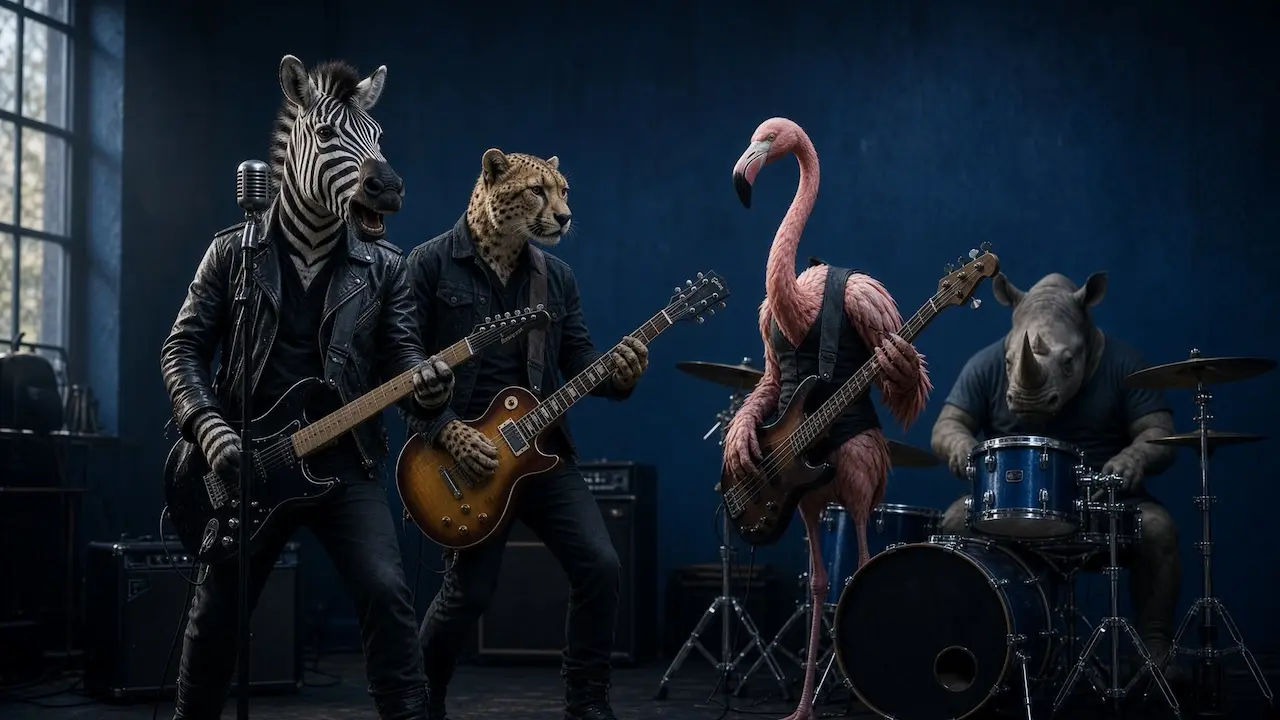
Music videos have long served as one of the most powerful extensions of recorded music. From the early experimental shorts of the 1960s and the MTV explosion of the 1980s to the high-budget cinematic productions of the 2000s and the short-form vertical content dominating social platforms today, the format has continually adapted to technological and cultural shifts. In 2026, another transformation is underway—one driven by artificial intelligence. AI is no longer a peripheral experiment in music video creation. It has become a central production method that is reshaping access, speed, creative possibilities, and economics across the industry. The future of music videos is increasingly AI-driven, not because machines will fully replace human artistry, but because generative systems are collapsing traditional barriers of cost, time, and technical expertise while opening new aesthetic and narrative frontiers.
Traditional Barriers and the High Cost of Visual Storytelling
For decades, a professional music video required substantial resources. Labels or artists needed to hire directors, cinematographers, lighting crews, choreographers, editors, and post-production specialists. Locations had to be secured, permits obtained, performers scheduled, and equipment rented. Budgets frequently ran into the tens or hundreds of thousands of dollars for mid-tier productions, and major-label videos could reach millions. Independent artists often settled for simple lyric videos, performance clips shot on consumer cameras, or no visual content at all. The result was a visible divide: well-funded acts enjoyed polished promotional assets that amplified streams and cultural impact, while many others struggled to compete in an attention economy that heavily favors visual packaging.
How AI Is Transforming Music Video Production
AI tools have altered this equation. Modern systems can analyze an uploaded audio track for tempo, beat structure, energy curves, spectral characteristics, and even lyric content. They then generate synchronized visuals—ranging from abstract reactive animations to narrative sequences with consistent characters, lip-sync performance, dynamic camera movement, and stylistic coherence. Production that once took weeks or months can now yield a polished first cut in minutes or hours. Costs have fallen dramatically; what previously demanded a production team can sometimes be achieved for a fraction of former budgets, occasionally under a thousand dollars or through subscription and credit-based models accessible to individual creators. Labels are also leveraging these capabilities to revitalize older catalogs, creating contemporary visuals for classic recordings whose original video rights were never controlled or for which new shoots would have been uneconomical.
This shift is not merely about efficiency. Music-first AI systems treat the audio as the primary driver rather than an afterthought layered onto generic video generation. They detect structural sections—verses, choruses, bridges, drops—and align visual intensity, cuts, and transitions accordingly. Lyric interpretation informs storyboarding and scene selection. Character consistency across dozens of shots has improved significantly, as has lip-sync accuracy across multiple languages. Output resolutions have advanced; 1080p is now a baseline, with 4K increasingly standard and higher resolutions in development. Multi-format export—widescreen for traditional platforms, vertical for short-form social feeds, and square crops—addresses the fragmented distribution landscape of 2026, where a single release must perform across YouTube, TikTok, Instagram Reels, and other channels.
Opportunities for Independent Artists and Major Labels
The implications for independent artists are particularly profound. Survey data from a nationwide study of creators, musicians, and industry professionals indicate that tracks released without accompanying visual content suffer measurably lower engagement in their first week compared with those that include at least a lyric video or generated visualizer. AI lowers the threshold for meeting that expectation. Artists can iterate rapidly: generate multiple stylistic variations, test different narrative approaches, refine based on audience feedback, and release updated visuals without repeating expensive shoots. Electronic, ambient, and instrumental genres often yield especially cohesive results because the AI can focus on mood, texture, and rhythmic energy without the added complexity of verbal narrative interpretation. Yet narrative and performance-oriented videos are also advancing, with systems capable of generating scripts, storyboards, character designs, environments, and edited sequences from a combination of audio analysis and text or image prompts.
Major labels and established catalogs are adopting the technology strategically. Saregama, India’s oldest record label, is using generative AI to produce music videos for film songs from the 1960s and 1970s for which it owns the audio rights but not the original visuals. The approach allows the company to refresh material for younger audiences while keeping costs low enough to make the effort commercially viable. Similar logic applies elsewhere: AI enables volume production of visual assets for large catalogs, supporting playlist placement, social campaigns, and cross-generational marketing. Hybrid workflows are emerging in which AI generates initial sequences or B-roll, and human directors, editors, and artists refine the output for emotional precision and brand alignment. End-to-end platforms that analyze music, interpret lyrics, build storyboards, and deliver edited videos in minutes further illustrate how rapidly these capabilities are maturing.
The Continuing Value of Human Expertise and Originality
Even as generative tools expand access and accelerate production, specialized music video companies continue to underscore the enduring value of human originality, expertise, and creative direction. ARTtouchesART, a London-based music video production company, focuses on developing distinctive concepts that align closely with an artist’s sound and identity. The team also applies this filmmaking expertise to AI-driven and hybrid video projects, combining directing, cinematography, storyboarding, AI generation and post-production to create distinctive visual narratives for artists and brands. In an era of rapid AI generation, such expertise remains essential for work that demands nuanced emotional resonance, cultural specificity, and lasting visual impact.
Emerging Technological Trends
Technological trends point toward even deeper integration. Real-time or near-real-time generation is progressing, reducing the lag between prompt and preview and enabling more interactive creative processes. Audio-reactive capabilities are moving beyond simple amplitude response to structure-aware and stem-level control, allowing specific instruments or vocal lines to influence distinct visual parameters. Longer-form generation, improved physical plausibility in motion and environments, and better multi-character consistency continue to advance. Looking further ahead, real-time visual generation during live performances and tighter coupling between music creation tools and video systems are realistic near-term developments. The boundary between studio production and stage visuals is already blurring.
Challenges, Quality Concerns, and Ethical Questions
Despite these gains, significant challenges remain. Quality is uneven. Early or poorly prompted outputs can exhibit artifacts, inconsistent anatomy, uncanny motion, or narrative incoherence. Character drift across scenes, imperfect lip-sync, and limited understanding of cultural nuance or subtle emotional subtext still require human oversight and iterative refinement. The best results typically emerge from hybrid processes in which artists and directors guide the AI with detailed prompts, reference images, selective regeneration of shots, and traditional editing tools for final assembly. Claiming that AI alone produces “finished” professional work without skill or judgment overstates current capabilities.
Ethical and practical challenges surrounding AI in entertainment remain equally pressing. Training data provenance is contested; many generative models have been built on large volumes of existing visual and musical material, raising copyright and consent issues. The use of an artist’s likeness or voice without authorization creates risks of deepfake-style misuse. Platforms and rights organizations continue to develop disclosure requirements, labeling standards, and compensation frameworks, but consensus is incomplete. Authenticity debates persist: some audiences and creators view heavy AI reliance as diminishing the human element that has historically defined artistic value, while others see the tools as new instruments that expand expressive range when used thoughtfully. Environmental costs associated with large-scale model training and inference also warrant attention, particularly as generation volumes increase.
There is a related risk of visual homogenization or “AI slop”—generic, formulaic imagery that floods feeds and dilutes distinctiveness. The artists and labels that will thrive are those who treat AI as a collaborator rather than a replacement for vision. Strong creative direction, distinctive visual languages, and careful curation remain essential. AI can accelerate production and democratize access, but it does not automatically confer originality or emotional resonance. Human taste, cultural context, and intentional storytelling continue to separate compelling work from disposable content.
Industry Adaptation and the Road Ahead
The economic structure of the music industry is adjusting in parallel. Lower production costs free budget for other priorities—touring, touring, marketing, or higher-quality audio production. At the same time, the expectation of constant visual content places new demands on artists’ time and attention. Skills in prompting, model selection, iterative refinement, and multi-platform adaptation are becoming part of the modern musician’s toolkit, much as basic recording and mixing knowledge became widespread with the rise of digital audio workstations. Educational institutions and industry programs are beginning to address these competencies.
Looking ahead, the trajectory is clear. AI will not eliminate traditional music video production for high-profile projects that require specific locations, live performances, or unique physical performances. Cinematic ambition, documentary approaches, and certain live-action aesthetics will continue to demand conventional crews. Yet for the majority of releases—especially from independent and mid-tier artists—AI-driven or hybrid methods will become the default. Catalog reimagining, rapid social-first content, experimental abstract visuals, and personalized or interactive experiences will expand. As models improve in narrative coherence, temporal consistency, and multimodal understanding, the distinction between “AI video” and “professional music video” will grow increasingly blurred for many viewers.
Ultimately, the future of music videos is AI-driven because the technology aligns with the structural realities of contemporary music consumption: the need for speed, volume, platform adaptation, and accessibility in a fragmented, algorithmically mediated marketplace. The artists and organizations that approach these tools with curiosity, critical judgment, and a commitment to distinctive creative vision will shape the next era of the form. Technology provides new means; the ends—evoking emotion, building identity, and connecting listeners to music through compelling imagery—remain fundamentally human.
References
- In Sync: Music and Video 2026. Berklee College of Music. Berklee Emerging Artistic Technology Lab. (2026).
- Saregama, India’s oldest label, is using AI to make music videos. Music Business Worldwide. (2026, August 5).
- OiiOii AI launches AI music video creator that turns songs into fully produced music videos in minutes. PR Newswire. (2026, August 5).
- AI in entertainment: 19 practical and ethical challenges. Forbes Technology Council. (2024).
