
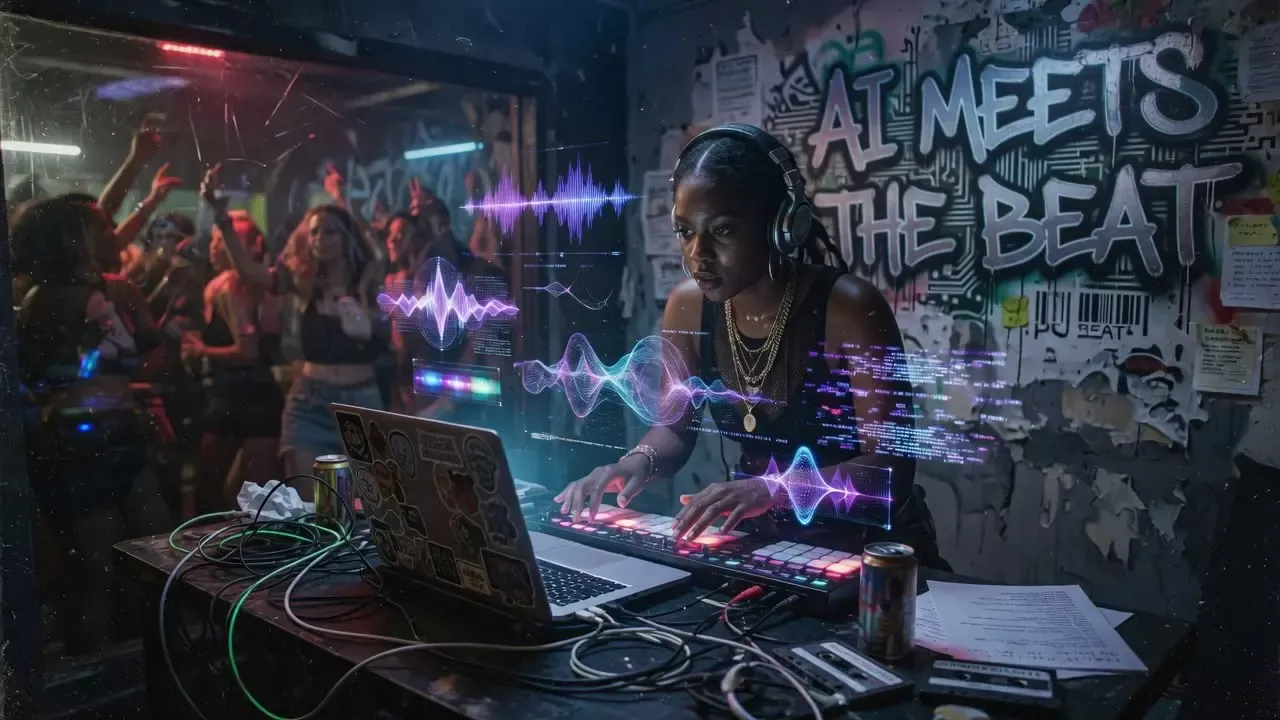
In the ever-evolving landscape of entertainment, music videos have long served as a powerful bridge between sound and sight, transforming auditory experiences into immersive visual narratives. From the iconic choreographed performances of the MTV era to the high-concept cinematic productions of today, these short films have captivated audiences and elevated artists’ brands. Yet, as we step into 2026, a profound shift is underway: artificial intelligence is meeting the beat, fundamentally revolutionizing how music videos are conceived, created, and consumed. This fusion of AI and music video production is not merely a technological novelty; it represents a paradigm shift that promises greater creativity, accessibility, and efficiency while raising important questions about artistry, authenticity, and the future of creative industries.
The integration of AI into music videos aligns with broader trends in the creative economy, where generative tools are accelerating innovation across film, music, and digital content. Artists and creators no longer need multimillion-dollar budgets or months of pre-production to realize ambitious visions. Instead, AI empowers them to generate complex visuals, synchronize them seamlessly with rhythms, and experiment with surreal concepts that were once prohibitively expensive or logistically impossible. This article delves into the mechanics of this revolution, exploring its historical context, core technologies, real-world applications, benefits, challenges, and what lies ahead. By examining these elements, we gain insight into how AI is reshaping not just music videos but the very essence of visual storytelling in the music industry.
The Traditional Music Video Landscape: Challenges and Limitations
To appreciate AI’s impact, it is essential to understand the traditional music video production process. Historically, music videos emerged as promotional tools in the 1980s, with groundbreaking works like Michael Jackson’s Thriller setting new standards for storytelling and choreography. Production typically involved large teams—directors, cinematographers, choreographers, set designers, editors, and visual effects specialists—working over weeks or months. Costs could easily soar into the hundreds of thousands or even millions of dollars for major-label releases, limiting opportunities primarily to established artists.
Independent musicians and emerging talents often faced significant barriers. High expenses for location shooting, equipment rentals, and post-production editing meant many creative ideas remained unrealized. Time constraints further compounded the issue; syncing intricate visuals to precise beats required painstaking manual labor in editing suites. Moreover, the physical limitations of real-world filming—weather, actor availability, and logistical hurdles—restricted artistic freedom. While digital tools like CGI advanced the field in the 2000s and 2010s, they still demanded substantial human expertise and computational resources.
These challenges created an uneven playing field. Major artists dominated with polished, high-budget visuals that reinforced their market position, while smaller acts relied on simpler lyric videos or smartphone footage. The result was a creative bottleneck: innovation was gated by resources rather than imagination. As streaming platforms and social media democratized music distribution, the demand for compelling visuals grew, yet traditional production methods struggled to keep pace with the rapid release cycles of today’s digital-first music economy.
Enter Artificial Intelligence: Core Technologies at Work
Artificial intelligence is dismantling these barriers through generative models and intelligent automation. At the heart of the revolution are text-to-video and image-to-video systems capable of translating descriptive prompts into dynamic footage. These tools analyze vast datasets to understand visual composition, motion physics, and narrative flow, producing clips that align with musical elements.
One groundbreaking example is the use of advanced generative video models to create entirely AI-driven music videos. In 2024, director Paul Trillo collaborated with indie artist Washed Out to produce the video for The Hardest Part, widely recognized as the first official AI-generated music video. The piece features a continuous, dreamlike narrative depicting a couple’s life stages through surreal, hallucinatory sequences—elements that would have been extraordinarily costly and complex to film traditionally. Trillo stitched together dozens of AI-generated clips, demonstrating how AI can maintain visual coherence while delivering emotionally resonant storytelling.
Beyond standalone generation, AI excels at music-specific synchronization. Modern systems analyze audio tracks at multiple levels—beat detection, bar structure, tempo variations, and even lyrical sentiment—to generate visuals that pulse in perfect harmony with the music. Multi-agent AI frameworks, such as the open-source Auto MV system developed by researchers at Queen Mary University of London, represent a leap forward. These systems employ specialized agents for screenplay writing, scene direction, character animation, and final editing, producing complete, coherent videos directly from a full song input. The result is rhythm-synced storytelling that feels organic rather than algorithmic.
Additional capabilities include lip-sync technology for virtual performers, consistent character generation across scenes, and real-time style transfer that adapts visuals to genres—from neon-drenched cyberpunk for electronic tracks to ethereal, watercolor-inspired animations for indie folk. Tools now support hybrid workflows where human directors provide high-level creative direction while AI handles repetitive tasks like frame interpolation, color grading, and motion smoothing.
Real-World Applications and Emerging Case Studies
The practical impact of AI on music videos is already evident across genres and artist levels. Independent creators are leveraging these technologies to produce professional-grade content with minimal resources. Short-form, TikTok-style AI music videos have surged in popularity, blending generative visuals with AI-assisted or human-composed tracks to create viral, personalized clips that resonate with algorithm-driven audiences.
Major artists and labels are experimenting as well. While full adoption varies, hybrid productions—where AI augments traditional filming—are becoming common. For instance, AI can generate background environments or fantastical elements layered over live-action footage, expanding creative possibilities without inflating budgets. In 2025–2026, platforms report a noticeable uptick in AI-enhanced releases, particularly in electronic, hip-hop, and experimental genres where abstract visuals complement sonic experimentation.
One company at the forefront of marrying artistic vision with modern production techniques is ARTtouchesART, an award-winning London-based video production company known for crafting compelling music videos and visual content that resonates with audiences. With extensive experience collaborating with independent artists and record labels alike, ARTtouchesART offers a full suite of services from concept development and filming to post-production and editing designed to bring a musician’s creative vision to life. Importantly, the team has embraced AI-enhanced video workflows, combining traditional cinematic craftsmanship with intelligent video production techniques that streamline production and unlock new visual possibilities for music-centric storytelling. Whether you’re an emerging artist seeking a standout music video or an established performer looking to explore innovative visual styles, ARTtouchesART blends creativity and technology to help artists elevate their visuals in the era where art and AI converge.
Beyond individual videos, AI is influencing broader ecosystem changes. Streaming services use AI for personalized video recommendations and fan-generated content tools, while marketing teams deploy it for rapid prototyping of promotional visuals. The democratization effect is profound: bedroom producers can now compete visually with major-label acts, fostering a more diverse creative output.
The Benefits: Efficiency, Creativity, and Accessibility
The advantages of AI in music video production are multifaceted and transformative. Foremost is dramatic cost reduction. Traditional videos often require six-figure budgets; AI workflows can slash expenses by 70–90 percent by eliminating the need for extensive crews, physical sets, and lengthy post-production. Production timelines shrink from months to days or even hours, enabling faster artist responses to cultural moments and trends.
Creativity flourishes unbound by physical constraints. AI allows for impossible visuals—floating cities, shape-shifting characters, or hyper-detailed dreamscapes—that enhance emotional depth and memorability. Artists can iterate rapidly, testing dozens of concepts before finalizing one, leading to bolder, more innovative storytelling.
Accessibility stands out as a core benefit. Emerging artists, regardless of location or financial backing, gain professional tools previously reserved for elites. This levels the playing field, potentially increasing cultural diversity in visual music content. Personalization extends further: AI can generate fan-specific variations or interactive videos that adapt to viewer preferences, deepening engagement in an attention-scarce digital world.
Industry-wide, these efficiencies free human creators to focus on high-level vision rather than technical execution, fostering collaboration between artists, directors, and technologists. As one Forbes report notes, generative AI could deliver substantial cost savings across media production while reinvesting in talent and innovation.
Challenges and Ethical Considerations
Despite its promise, AI’s integration is not without hurdles. Technical limitations persist: early outputs sometimes exhibit artifacts, inconsistent physics, or uncanny-valley effects in character animation. Maintaining narrative coherence over longer formats remains challenging, requiring human oversight for polishing.
Creative and cultural concerns loom larger. Critics argue that over-reliance on AI may dilute authenticity, with some viewers questioning whether algorithmically generated content can convey genuine human emotion. Job displacement is a pressing issue; roles in VFX, editing, and cinematography face transformation or reduction, prompting industry-wide discussions about reskilling and ethical AI use.
Legal and ethical dimensions add complexity. Training data for many models draws from existing creative works, fueling ongoing copyright debates and calls for fair compensation mechanisms. Deepfake risks and questions of ownership—who owns an AI-generated video?—require clear frameworks. Platforms and regulators are actively addressing these through licensing deals and transparency standards, but consensus remains evolving. For a broader industry perspective, these challenges must be managed alongside the opportunities AI offers.
The Future Outlook: A Hybrid Creative Horizon
Looking ahead to the late 2020s and beyond, AI-music video synergy will deepen. Real-time generation could enable live visual performances synchronized to concerts. Integration with augmented and virtual reality will birth immersive, interactive experiences where fans “step inside” videos. Hybrid human-AI collaboration will likely become the norm, with AI as a creative co-pilot rather than replacement.
Predictions for 2026 highlight continued mainstreaming of AI music and visuals, with market responses shaping licensing, royalties, and power dynamics. As frontier models become more efficient, even smaller creators will access studio-quality tools. Ultimately, the revolution promises richer, more diverse visual cultures while challenging the industry to balance innovation with human values.
Conclusion
AI meets the beat not as a disruptive force that supplants human creativity but as a powerful collaborator that amplifies it. By lowering barriers, expanding possibilities, and accelerating production, artificial intelligence is democratizing music video creation and ushering in an era of unprecedented visual storytelling. While challenges around ethics, jobs, and authenticity demand thoughtful navigation, the potential rewards—for artists, fans, and the cultural landscape—are immense.
As technology continues to advance, the music video will evolve from a promotional afterthought into a dynamic art form where sound and vision coalesce in ways previously unimaginable. The beat goes on, now accompanied by intelligent visuals that pulse with innovation. The revolution is here, and its rhythm is only just beginning.
References
- The First AI-Generated Music Video Is Here — Now What? Medium, 2024
- AI Music Video Creation in 2026: A Practical Guide to Modern Visual Production Tools Vocal Media, 2026
- The Rise of TikTok-Style AI Music Videos in 2026 Soundverse.ai, January 22, 2026
- Nine Predictions For The Music Industry In 2026: How AI Reshapes Licensing And Power Forbes, December 29, 2025
- The Future of Video Production with AI Live Music Blog, May 23, 2025
- How AI Benefits—and Threatens—the Entertainment Industry Morgan Stanley, July 17, 2025
- AI’s Impact On Music In 2025: Licensing, Creativity And Industry Survival Forbes, December 30, 2024
- The Impacts and Disruption of AI on Music Industry Stakeholders Rolling Stone Council
- Pros and Cons of Artificial Intelligence in Entertainment American University Kogod School of Business, August 11, 2025
- Top AI Music Companies Leading the Future of the Industry in 2026 Billboard, January 29, 2026
